How to Buy a Homestead: 25 Things to Look for Before You Make an Offer
There are a lot of things on this list you would probably never think about.
Buying a homestead is one of the biggest purchases most people will ever make.
It’s one thing to look at a property with the goal of buying a house.
It’s a completely different thing to look at a property with the goal of buying a homestead.
It’s easy to become captivated by rolling hills, old barns, or picturesque views, but after the excitement wears off, it’s the practical details that will determine whether your property becomes a joy to live on—or a constant source of frustration.
Having now lived on our own homestead for years (and visiting countless other homesteads on the market), there are several things I would consider absolutely essential if I were buying another property.
Here are the 25 things I’d look for before making an offer.
I really tried hard to think about things that might not be immediately thought about after my own experiences (the less than obvious things), so I hope you find this list especially helpful.
1. Adequate Food Storage (My #1 Priority)
If I could give only one piece of advice, it would be this:
Do not underestimate the importance of food storage.
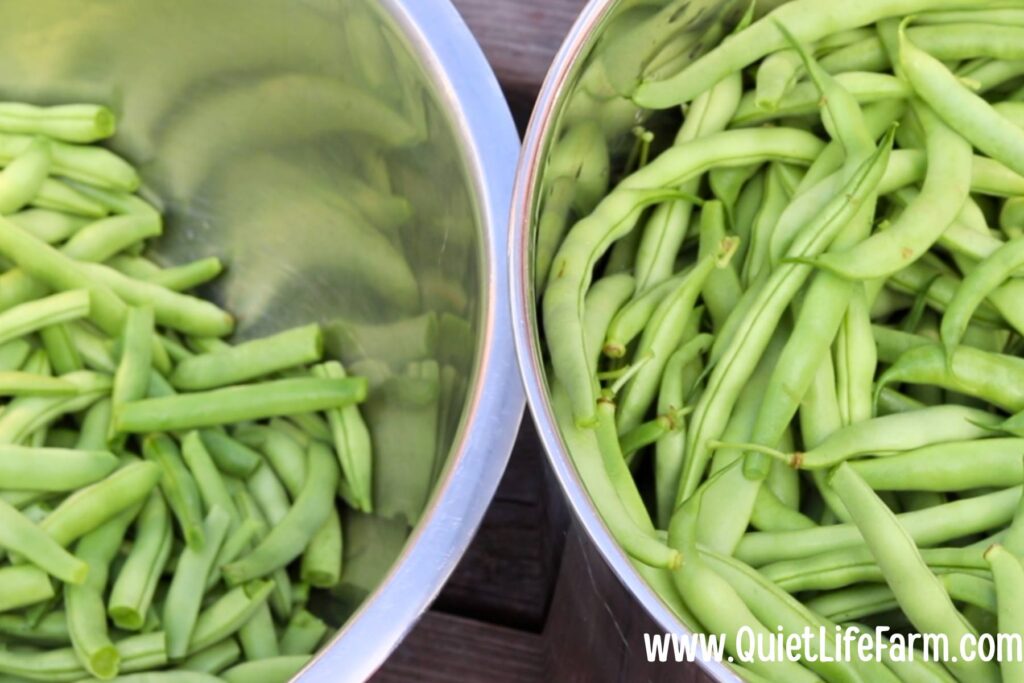
People spend a tremendous amount of time talking about gardens and livestock, but very little time talking about where all that food is actually going to live once you’ve harvested it.
Personally, I would never choose a homestead with a tiny kitchen and no basement, oversized pantry, cellar, or root cellar. (the tiny kitchen is fine — the lack of PLENTY of food storage, more than just enough for a weekly grocery trip…THAT is not okay)
A crawl space simply isn’t an adequate substitute.
Despite all of the internet “hacks” you’ll find suggesting otherwise, crawl spaces generally don’t maintain the stable temperatures, humidity, darkness, or accessibility needed for long-term food storage. More importantly, they’re difficult to access. You should be able to regularly rotate your food, inspect jars, check for spoilage, and make sure rodents or insects haven’t found their way into your pantry. You’re just not going to be crawling into your crawl space that often. And even if you do, you still cannot physically stand up in it or get into a good enough physical position to adequately check on all of your stored food.
If storing food becomes inconvenient, you’ll simply do less of it. And that’s a large part of homesteading for most people.
Even if you think today that you’ll freeze everything in a bunch of garage or shed freezers, there’s a good chance your goals will change. Most homesteaders eventually discover that canning, dehydrating, fermenting, and root-cellaring become valuable tools—not just for preservation, but for flavor, convenience, and pantry variety.
Your food deserves a proper home.
2. Buy for the Homestead You Hope to Have
Before looking at properties, ask yourself one question:
What do I actually want this homestead to become?
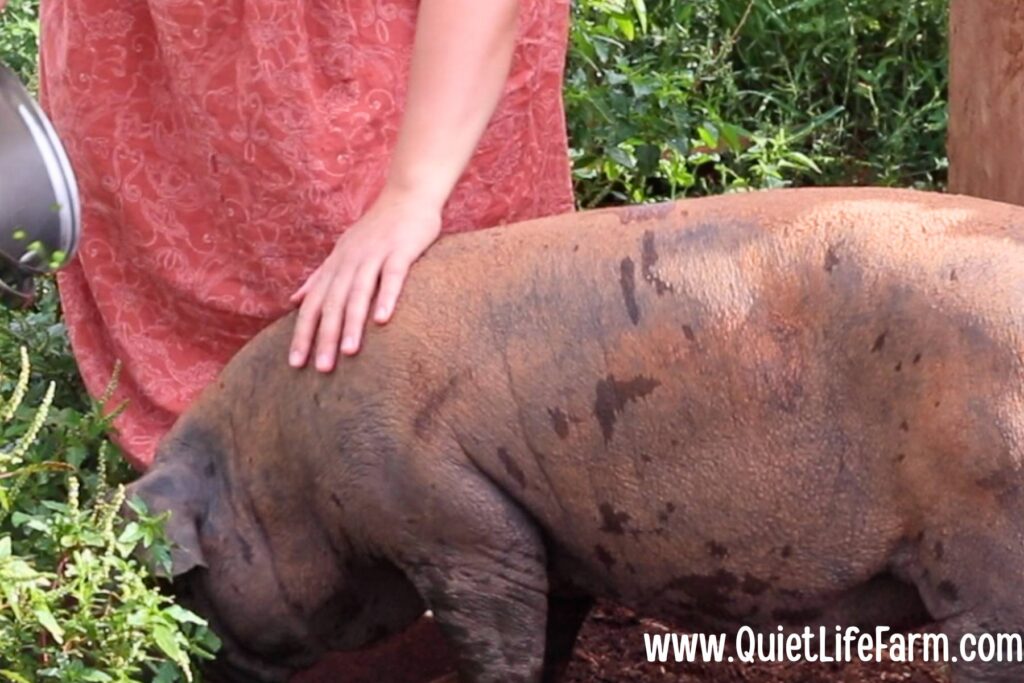
If cows are high on your immediate to-do list, you’ll want already established pasture with healthy grass. Creating quality pasture from heavily wooded land takes years.
If you’re dreaming of chickens, pigs, goats, or sheep, wooded acreage can actually work beautifully.
Goats happily clear brush and even poison ivy.
Pigs naturally help disturb compacted soil, and fertilize it beautifully.
Chickens spread manure, scratch through leaves, eat (some) plants, and help control insects.
A wooded property isn’t wasted land—it simply lends itself to different kinds of homesteading.
(If you want a wooded lot, I highly recommend reading Little House in the Big Woods with your family. You’ll get a very full picture of just how vibrant homesteading on a wooded lot can be!)
3. More Land Is Usually Better
If your budget allows, buy more acreage than you currently think you’ll need.
Most people expand their interests over time.
Maybe today you only want a garden.
Five years later you might want sheep.
Or an orchard.
Or bees.
Or a larger woodlot.
You can often build an addition onto a house.
Adding acreage later is much harder.
4. Consider a Mostly Wooded Property
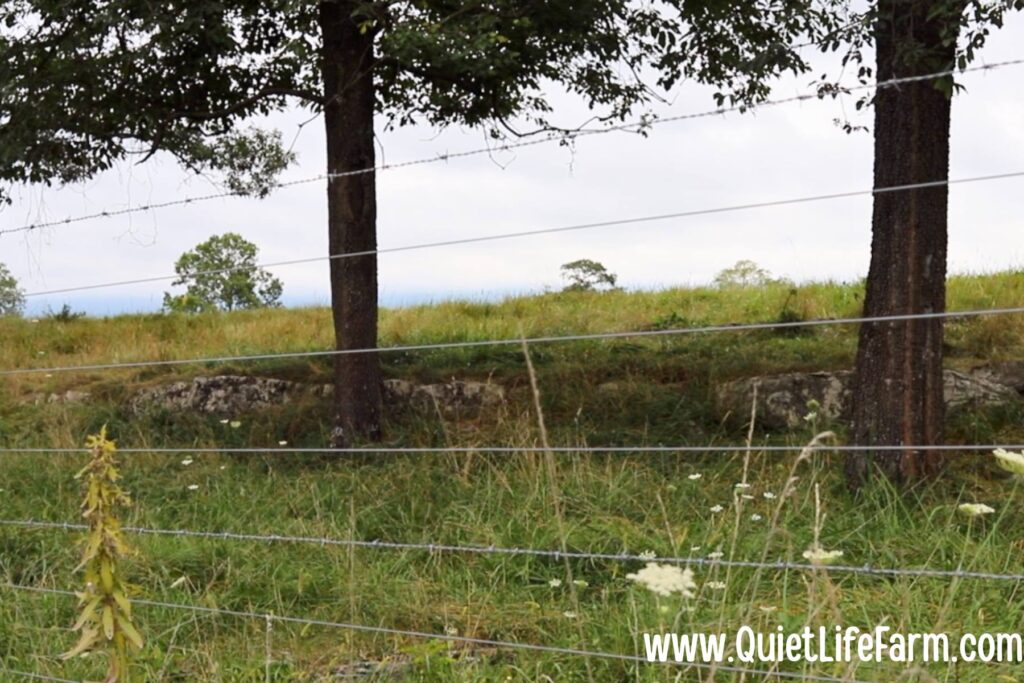
Many people immediately dismiss wooded land.
Personally, I think it deserves a closer look.
Wooded acreage is often more affordable than cleared pasture, requires far less mowing, and allows you to develop the property gradually instead of feeling pressured to manage everything immediately.
You can clear small areas as your homestead grows rather than maintaining acres of open pasture before you’re ready to use them.
If you’re not planning on going full force on homesteading from day 1, it’s a really way to slowly build up a homestead at a more affordable price tag.
5. Is There Enough Sun?
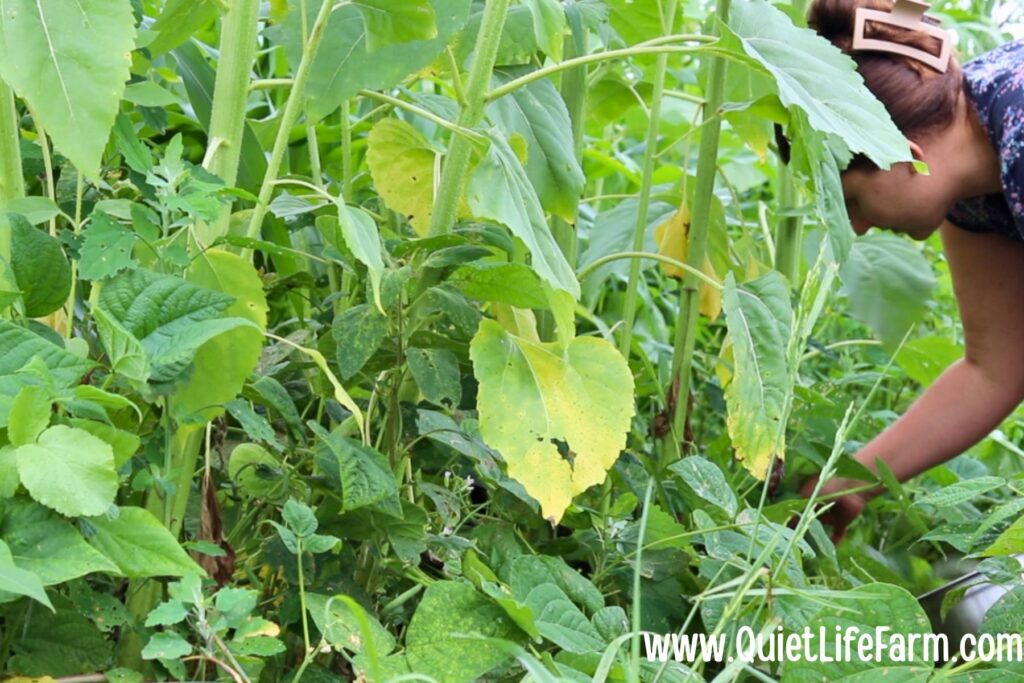
Gardens obviously need sunlight.
However, full blazing sun all day isn’t always ideal.
Some afternoon shade can actually protect crops during drought and extreme summer heat.
Observe where the sun travels across the property before making assumptions.
You’ll still want a large enough sunny spot for your garden, so try and plan for that the best that you can.
And — figure out where the drainfield is, because you really do not want to plant your garden over your drainfield. Often that is the “flat sunny spot” on a property, so be very wary of that!
One last quick note on considering that garden placement — the closer to the house, the better! You want something that’s easy to access so that you spend more time caring for it, plus if you decide you want to grab one more tomato for dinner, it’s much easier to do that when it’s right outside your door.
6. Distance From Busy Roads
For our family, this has always been a hugely important consideration.
If you have children, distance from traffic adds an extra measure of safety. Especially when you’re planning on spending plenty of time outside together.
It also provides something people rarely think about until after moving in:
Quiet.
Road noise can become surprisingly tiring over time.
And once you’ve lived without road noise, it’s so hard to imagine going back to it. It’s an incredible blessing that I regularly acknowledge and do not take for granted.
7. Nearby Commercial Agriculture
Take time to look beyond the property lines.
Large crop farms can sometimes mean herbicide drift depending on weather conditions and neighboring farming practices.
That has the potential to destroy your garden, every single year.
It’s worth understanding what’s happening around your future homestead—not just on it.
And, this is another benefit of a partially wooded lot — a densely wooded lot can help prevent herbicide drift. It’s not foolproof, but it can help. Of course, if you’re living in an area where herbicide drift is something to worry about, it might be difficult to find a wooded lot to begin with. But it’s worth noting.
8. Nearby Poultry Houses
Commercial poultry houses are another consideration.
Living a mile or more away is often perfectly fine.
Living immediately beside one may be a very different experience.
(they’re stinky. and busy.)
Pay attention to prevailing winds (and any smells they carry) during your visit.
9. Your Neighbors
Who lives next door matters.
If you plan to raise pigs, roosters, goats, or other livestock, having neighbors who understand rural life can make a tremendous difference.
Especially when it comes to pigs and roosters. I think those are normally the ones that cause the most grief for neighbors.
Good neighbors are one of the greatest blessings a homesteader can have.
10. Deed Restrictions
This one is extremely important and can really destroy all your homesteading dreams after you’ve already bought your property if you don’t look into it first.
Don’t stop at checking whether there’s an HOA.
Ask to see the property’s recorded deed restrictions or restrictive covenants as well.
Even rural properties without an HOA sometimes prohibit certain livestock or land uses. Pigs in particular are a really common deed restriction, even if there is no HOA.
If you’re planning on living in a mobile home or a camper, even if there is no HOA, the deed can prevent you from doing these things, too.
The deed can also prevent things such as additional dwellings being built, or the land being subdivided, so if you’re planning on starting a commune/homesteading community with friends or family, this one would prevent you from pursuing that altogether.
Read every restriction carefully before purchasing.
11. Don’t Automatically Dismiss Rural HOAs
This might surprise some people.
While I’d generally avoid heavily regulated subdivisions, some rural HOAs exist primarily to maintain private roads or snow removal.
In those situations, the association may be nothing more than neighbors working together to maintain shared infrastructure while allowing normal homesteading activities.
Oftentimes, a rural HOA will allow you to do literally anything you want with your land, they just want to make sure that potholes are fixed and roads are plowed in the winter because they live so far out that the state won’t maintain the roads.
Always read the rules before assuming.
(and still check the deed)
12. Test the Well Water
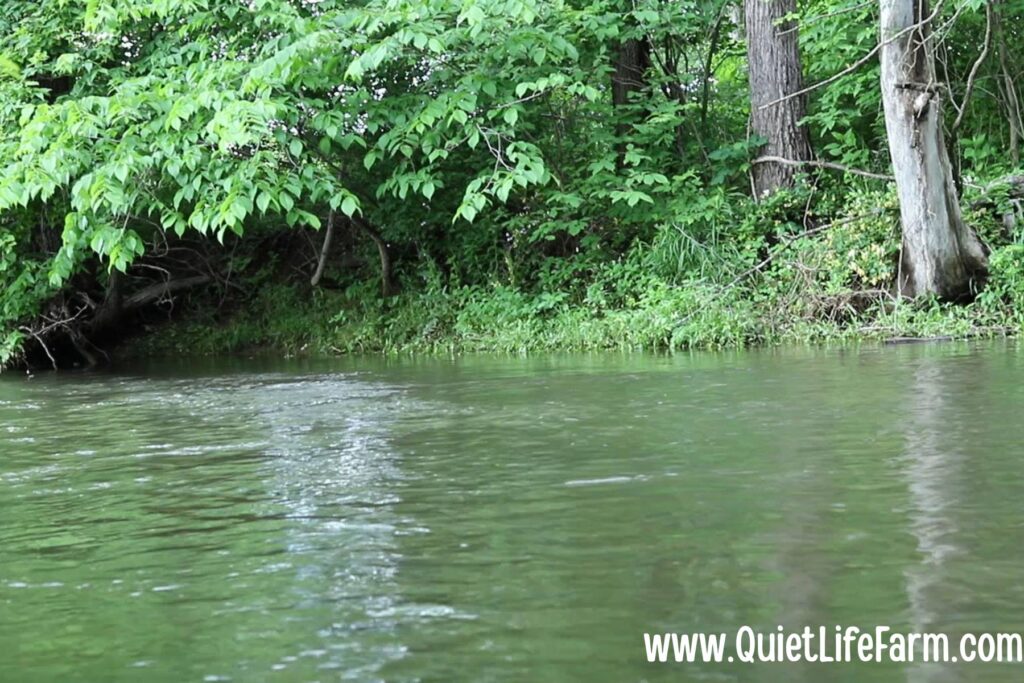
Never assume a private well has excellent water simply because it looks clear.
Always have the water professionally tested for bacteria, nitrates, and other contaminants before closing.
Besides wanting the water to be safe, some well water really tastes gross when it’s not in good shape.
Well water can usually be fixed, but it’s good to be aware of this.
Not only is it important for you — but it’s important for your animals, too.
You might automatically filter your drinking water anyway, but you’re probably not filtering the water you fill up your troughs with.
13. Inspect the Septic System (For Your Garden and Animals, Too)
A failing septic system can become an expensive surprise.
Always have it inspected, and figure out exactly where the drainfield is.
In some states and on older homes, they might not even know where the septic itself is.
I have seen older houses where the septic is just emptying out into a nearby creek without a septic tank at all. It had never been updated. This is also an obvious issue for any animals who might be drinking from that creek.
This is all probably something that will be checked on a normal house inspection for any house, but I think it’s still important to mention it because of how important it is to know where your drainfield is.
It’s not safe to plant a garden on top of a drainfield.
I know that plenty of people do it anyway, but it’s really not ideal.
And often, the one and only sunny flat spot on a property is in reality the drainfield.
So figure out everything about your septic. Not just for the sake of the septic itself, but for the sake of your garden.
14. Inspect the Foundation On Outbuildings
Old farmhouses often have character.
They can also have foundation problems.
Houses settle. It’s normal. But should also be fixed so that they’re safe.
Ideally, this sort of thing would be checked on a home inspection.
But outbuildings can sometimes be skipped on a home inspection depending on where you live and who is doing the inspection. Not all the time, but it absolutely happens.
It’s important to check on the structural stability on outbuildings, especially larger ones such as old barns.
Know exactly what you’re buying.
15. Check Drainage (For Your Garden)
Visit after a heavy rain if possible.
Water tells you a lot about land.
If you can’t time your showing to the weather, just look for clues such as water damage, erosion, or mold.
It’s good to know what to fix on your actual house, yes, but it’s also good to be able to plan for if you can even HAVE a garden, because it would be awfully sad to have your garden inevitably flood every year. (it’s at least good to know that you’ll need to pivot and plan for some raised beds!)
16. Look at the Soil
Pay attention to neighboring gardens, fields, and trees.
Healthy neighboring plants often suggest healthy soil.
Even poor soil can usually be improved over time.
When we bought our homestead, there were areas where didn’t even grow at all. Not a blade.
Years of compost, rotational grazing, and animals transformed those areas into some of our healthiest ground.
Don’t let imperfect soil scare you away. Just plan around it, and know that you’ll have to be patient for some of your homesteading things.
17. Existing Fencing
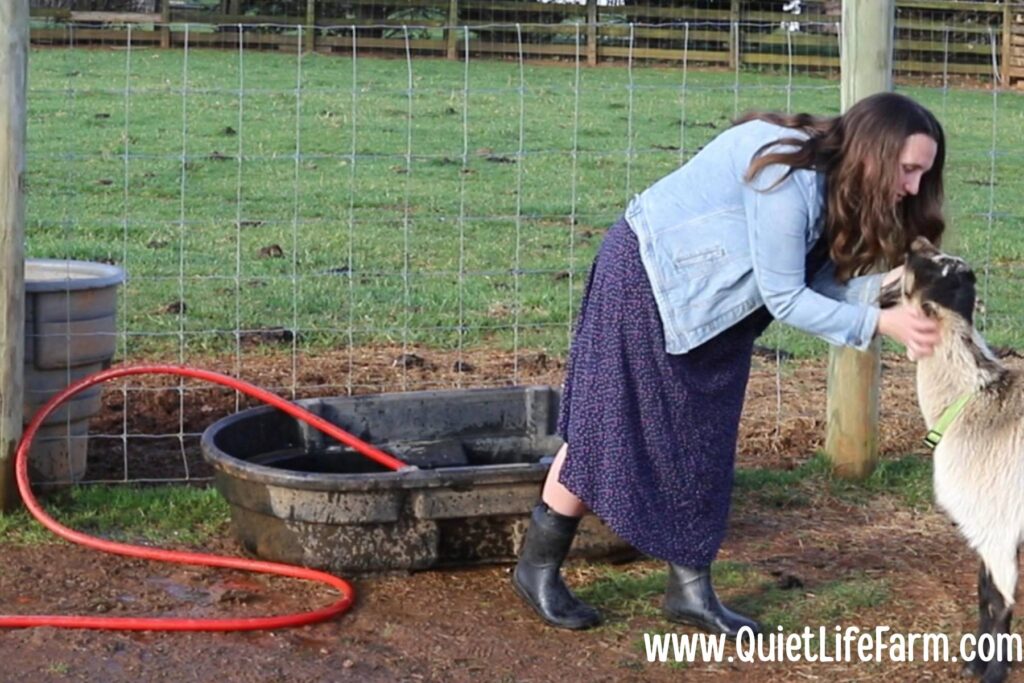
Good fencing saves thousands of dollars.
Evaluate its condition honestly.
Some of that really old fashioned fencing is just raw, thinner trees that were cut down and buried directly into the ground for fence posts. Don’t immediately dismiss it. It’s been there for decades already. It might be just fine to repair and move along.
Inspect all of your fencing closely.
(and remember — often t posts can help you make some of the most budget friendly fencing ever. It’s time consuming, but not the end all be all. Just be aware that t posts are incredibly difficult to remove if you ever want a more permanent fencing)
18. Existing Outbuildings
Barns, sheds, workshops, and equipment storage all add tremendous value.
Sure they can be added.
But it’s nice to start out with some.
(And remember, in a pinch, clean metal trashcans with bungee cords make perfectly acceptable animal feed storage while you’re setting up more permanent systems)
19. Water Access for Animals
Think ahead.
How will animals receive water in every season?
Look for either an existing outdoor pump, or at least two spigots connected to the outside of your house (because sometimes they freeze and fail in the winter when you’re constantly using them for your animals. it’s good to have a backup).
(here’s an extra hint I’ll just leave here — a pocket hose stored in a bucket that you can keep indoors between animal waterings to prevent it from freezing is a “must” during the winter)
20. Firewood
If you heat with wood—or hope to one day—a healthy woodlot is a wonderful resource.
Or, at least a dry place to store wood. Out in the country, you’ll probably find plenty of people you can buy firewood from by the cord.
21. Internet and Cell Service
Even those of us seeking a quieter life still need reliable communication.
Test it while you’re there.
Remember — if you don’t have cell service, a landline is probably no longer a solution anymore. There are a lot of companies phasing out landlines, so that’s very likely to not even be a solution. Even if you CAN get a landline now, it’s probably not wise to rely on that for the longterm.
No cell service? See if your realtor can get in contact with a neighbor to see what they use for cell service.
There are also cell phone service extenders you can install and use, but be prepared if the power goes out, because then they’ll no longer work (unless you have a generator to back it up).
22. Local Feed Stores
Know where you’ll buy feed, fencing supplies, and animal medications.
Driving an extra hour for every bag of feed gets old quickly.
Better yet, see if you can plan for storage for bulk bags of feed. (if you’re planning to homestead on a larger scale)
You can buy feed by the ton and have it delivered to your house, but you need a place to store it (and equipment to move a 1 ton bag of feed).
23. Emergency Services
Living farther out is wonderful.
Just understand how far emergency services, veterinarians, and hospitals are from your property.
It’s a pretty easy thing to call the non-emergency line for your fire department, emts etc to figure out what their estimated arrival time to an address would be.
It’s also nice to know how far away the nearest hospital is.
(And, if there’s a chance you might ever have a baby, it’s really nice to know what hospitals nearby provide maternity services, because many hospitals are phasing those out, especially in rural areas where the population is smaller and a maternity ward might not be as profitable. Even if you’re planning on having a home birth, it’s still really nice to know these things.)
24. Can You Picture Yourself Living There in Every Season?
Picture the property in the winter.
Is the driveway steep and rocky? Would you be required to plow it with some serious equipment so you’re not snowed in?
Picture it in the fall. Could hunters trespass on your land and potentially mistake your cows for deer? (as uncommon of a reckless occurrence as it is, it’s definitely something that occasionally happens)
Picture it in the summer. Is it near a large body of water? Will you be able to stand the insane amount of gnats, mosquitoes, and other bugs that can bring?
Picture it in the spring. Are you near a lot of other farm land where fertilizer will constantly be just a whiff away?
No property will be perfect. It’s up to you to figure out what you can cope with and what you cannot.
25. Buy the Lifestyle, Not Just the House
The house matters.
The acreage matters.
But ultimately you’re buying a way of life.
Picture yourself gardening there.
Raising children there.
Walking the property after supper. (my husband and I love doing this.)
Watching the seasons change.
If you can imagine building a life there—not just owning it—you’ve probably found something special.
Final Thoughts
The perfect homestead doesn’t exist.
Every property has compromises.
Our own homestead certainly isn’t perfect, but over the years we’ve learned that good soil can be improved, fences can be built, and gardens can be expanded.
What can’t easily be changed are things like deed restrictions, lack of food storage, noisy roads, or neighboring land uses.
Take your time.
Ask questions.
Walk the property more than once.
Spend lots of time inside AND outside.
And remember that you’re not simply buying land.
You’re choosing the place where countless ordinary days will unfold—and in the end, those ordinary days are what make a homestead feel like home.