15 Things Nobody Tells You About Starting A Homestead
Here’s what I wish someone had told me.
There are some beautiful visions of what homesteading looks like. Fresh eggs and milk, a beautiful garden bustling with fruits and veggies, children climbing in an orchard of apple trees…
And while those things absolutely happen, there are also plenty of realities that don’t make it into the pretty photos on social media.
After years of homesteading, I’ve learned that some of the most important lessons are the things that nobody talks about when you’re first getting started. If you’re dreaming about starting a homestead, here are a few things I wish someone had told me from the beginning.
1. You Will Never Feel Completely “Ready”
It’s easy to think that you’ll start raising chickens once you’ve read enough books, or plant a garden once you’ve done enough research.
And believe me, it’s good to research. (And while I’m on that topic, let me just say that I much prefer BOOKS on the topics you’re learning. Books answer the questions you didn’t think to ask. That doesn’t always happen with the internet.)
The truth is that most of homesteading is learned by doing. At some point, you simply have to start.
Mistakes happen. They WILL happen. But they’re not usually major. If you plant your tomatoe plants too close together, they’ll still product tomatoes. You can space them out better next year. Each year, you’ll learn more and more what your preferences are, and what works the best for YOU and your property. Mistakes are a learning process, not the end all be all.
2. Everything Takes Longer Than You Think
Building a chicken coop.
Planting a garden.
Putting up a fence.
Preserving food.
Almost every homestead project takes longer than you expect, especially when you’re learning new skills along the way.
And that first chicken coop you build? You’ll probably hate it and end up building something that better suits your needs in a few years.
I’ve learned to leave plenty of room in my plans for unexpected delays. Lower your expectations for when things will get done.
And bigger projects? If you can, hold off on them for a little while until you get a better feel for the layout of your land and how you think you want to use it. Especially for things like fencing.
3. Nature Doesn’t Care About Your Schedule
Animals still need to be cared for when you’re sick.
Gardens still need water when it’s really hot outside and you want to hide in the air conditioning.
Weeds continue growing no matter how much you realize you hate weeding.
One of the biggest adjustments of homesteading is learning to work WITH nature instead of trying to control it. Slowly invest in good tools, like a decent stirrup hoe for weeding the garden. Use woodchips to control weeds and to diminish how often you need to water. Keep the feeding and watering stations for your animals close to your house so you don’t have to wander too far when you’re sick or when there’s an ice storm outside. Think about how to make your jobs as EASY as possible, because homesteading is very redundant. You’ll be doing these jobs every day.
4. You’ll Become More Resourceful Than You Ever Thought Possible
Homesteading has a way of teaching you to solve problems with what you already have.
You’ll repair things instead of replacing them.
You’ll find new uses for old materials.
You’ll learn skills you never imagined needing.
Have the trash pile of leftover building materials. It’s ugly, but I promise you’ll constantly use it. (keep it out of plain sight if you can, and make sure anything that could contain water is upside down so you don’t breed mosquitoes.)
Talk to other homesteaders if you can. Tell them your problems and listen to their solutions.
Over time, you start seeing possibilities where you once saw problems.
5. Failure Is Part of the Process
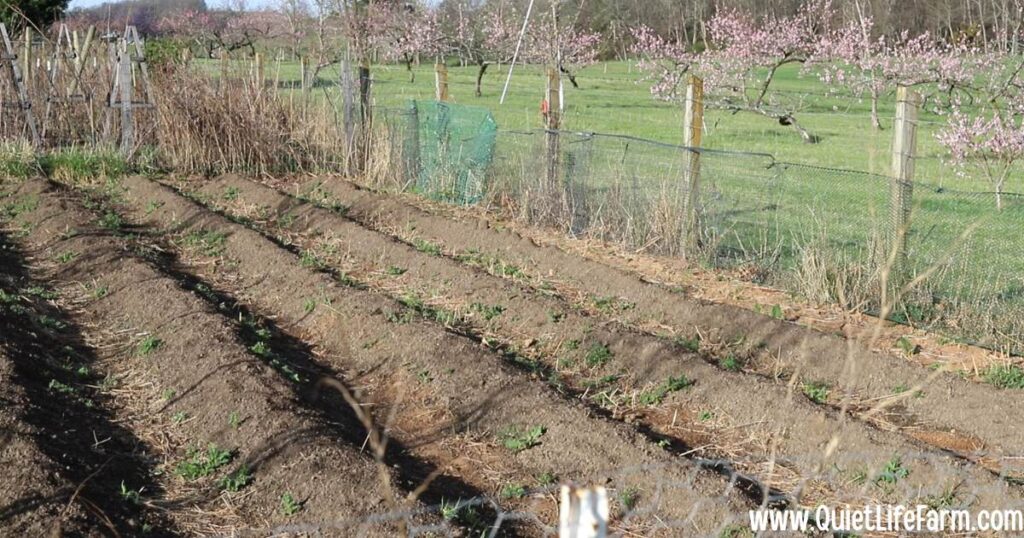
Seeds won’t germinate.
Animals will get sick.
Recipes will flop.
Gardens will fail.
It can be discouraging at first, but failure is often one of the best teachers on a homestead. And, thankfully, usually SOMETHING will still go “right.”
Every mistake teaches you something useful for next season. You will learn more each and every year!
6. Your Priorities Begin to Change
Many homesteaders start out wanting to produce more of their own food.
What surprised me was how much my priorities shifted over time.
I used to want to do EVERYTHING. I wanted to rely on NO ONE.
But, we were meant to live in community.
Historically, no one has ever “done it all.”
Even the Ingalls Family (yes, as in Laura Ingalls Wilder) lived in town for 30 years.
It’s okay to “just” do a garden and chickens.
It’s okay to “just” focus on raising your own meat.
You weren’t meant to do it all.
7. The Work Is Never Finished
There is always another project waiting.
Another fence to repair.
Another garden bed to build.
Another batch of food to preserve.
This can feel so overwhelming, especially at first.
Homesteading isn’t about finishing everything, because you never will.
Homesteading is about having a connection to LIFE, and enjoying life to its dirty, gritty fullest.
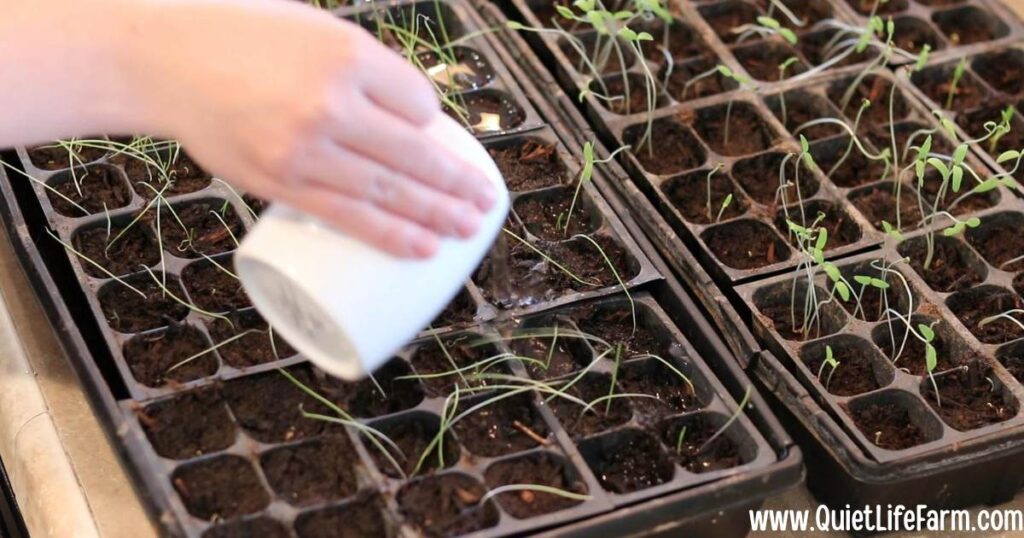
(And, don’t shock yourself. Start with adding one new “thing” each year. First grow a garden. Then bring home the chickens. The milk cow will come with time. There’s no need to overwhelm yourself.)
8. You Don’t Need As Much Land As You Think
Many people assume they need dozens of acres to start homesteading.
The reality is that you can learn an incredible amount on a small piece of land.
A garden, a few chickens, fruit trees, and basic homemaking skills can take you surprisingly far.
I started homesteading on ⅓ of an acre. You can fit a hefty garden and some chickens on that much land, no problem! I even planted some fruit trees and love seeing how big they are when I drive past that old property.
9. Your First Garden Probably Won’t Look Like the Ones Online
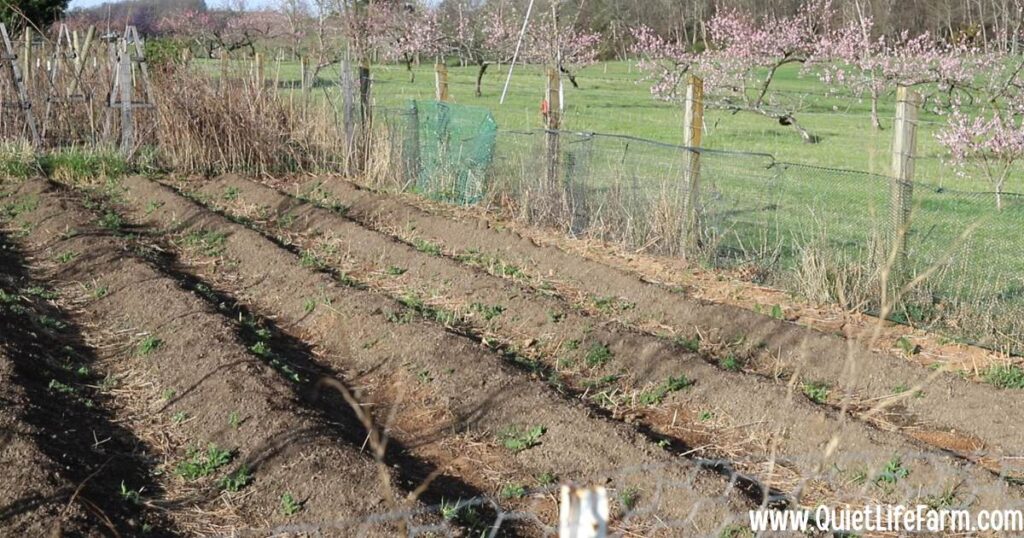
Social media has a way of making every garden look perfect.
Most real gardens have weeds.
Some plants struggle.
Some beds get neglected.
And that’s okay.
A garden can grow weeds AND food. If food is the goal, losing the battle to weeds while you’re still learning is STILL a successful harvest!
10. There are things you SHOULD do YEAR 1
There are some things I cannot recommend doing enough the FIRST YEAR of your homestead.
Firstly, plant your fruit trees. They take so long to grow. It will be years before you get fruit. Start them as soon as you move in. Before you unpack even. Dig a BIG hole, and pour a couple bags of compost into it. Then plant your fruit trees.
Plant your berries, too! Our family’s secret to success with blueberries is to dig a BIG hole, fill it up with TONS of peat moss, and then plant the blueberries into the peat moss. Put a THICK HEAVY layer of woodchips at the base of the bush.
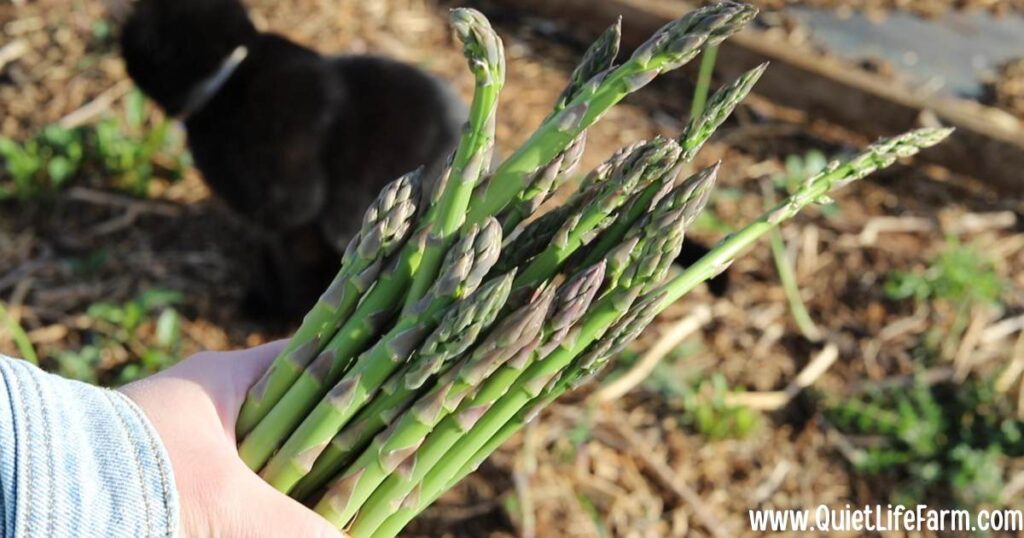
If you like asparagus, you’ll also want to plant a big, beautiful bed of asparagus. It takes a couple years to harvest asparagus, especially if you start your asparagus from seed. You can also buy male asparagus plants to jumpstart when you’ll see a harvest. (if you plant from seed, you’ll get half female asparagus and half male asparagus – and only the males produce those big fat spears you want to eat). Either way, plant that asparagus! It’s the first thing to come up and even if you don’t like asparagus, I bet you’ll like the fresh asparagus you grow in your garden.
11. Saving Money Isn’t Always Immediate
Many people get into homesteading hoping to reduce expenses.
While that’s certainly possible, there are often upfront costs for tools, fencing, animals, seeds, infrastructure, and supplies.
The savings usually come over time rather than overnight.
Some things are more “cost savings” than others.
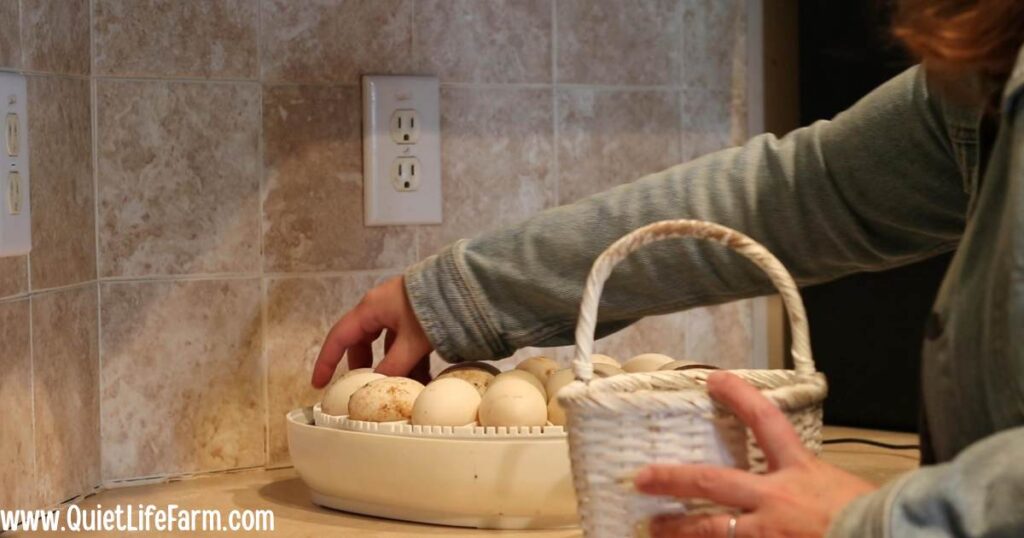
Frankly, it’s probably cheaper to buy eggs than to raise chickens, especially if you’re keeping them locked in a coop and have a higher feed cost than you would if you were free ranging them.
But you will not get the quality of this food from the grocery store.
12. You Start Appreciating Simple Things
Fresh eggs, in blues, greens, browns, and whites.
Beautiful jars of home-canned food.
The first tomato of summer, still warm from the vine.
Clean laundry drying on a clothesline in a breeze.
Homesteading has a way of making ordinary things feel extraordinary.
Unlikely consequence, at least for me? Phone addiction: gone. Homesteading has a way of making you slow down and soak it all in.
13. You’ll Learn to Let Go of Perfection
Not every loaf of bread will be beautiful.
Not every project will turn out exactly as planned.
Not every year will be your best year.
The sooner you let go of perfection, the more enjoyable homesteading becomes.
It doesn’t HAVE to be perfect. Sometimes it just has to work.
Oh, and zip ties. Buy zip ties. Trust me.
14. You’ll Gain Confidence Through Experience
The things that feel intimidating now eventually become second nature.
Whereas I used to be the “new homesteader,” over the years I have found that new homesteaders now ask ME for advice.
The first time you preserve food, build something, care for animals, or grow a successful crop, you’ll realize you’re capable of much more than you thought.
Confidence grows one skill at a time, and soon it will take you by surprise that people are asking YOU for advice, too!
15. Homesteading Is More About a Mindset Than a Place
This may be the biggest lesson of all.
Homesteading isn’t defined by acreage.
It isn’t defined by how many animals you own or how much food you produce.
At its heart, homesteading is about learning practical skills, becoming more self-reliant, and creating a life that aligns with your values.
You can begin that journey almost anywhere. I started mine in the suburbs on a tiny lot.
I planted the garden that took up most of our yard.
I got reported by my neighbors for having 3 laying hens neatly kept in my backyard (which was perfectly legal where I was, by the way).
You might not be in the most COMFORTABLE place to homestead, but it’s better to learn skills where you are now, than to suddenly acquire tons of land and tons of responsibility all at once. NOW is the time to PRACTICE with what you have!
Final Thoughts
Starting a homestead is one of the most rewarding things I’ve ever done, but it rarely looks the way we imagine it will.
There are challenges, frustrations, and plenty of unexpected lessons along the way.
But there is also tremendous satisfaction in learning new skills, caring for your home and family, and building a life a little closer to the things that matter most. To me, homesteading is about a connection to LIFE, hard work, and sharing this appreciation alongside my children.
If you’re waiting for the perfect time to start homesteading, consider this your reminder that perfection isn’t required. (and neither is land)
Start small. Learn as you go. And trust that you’ll figure out more than you think you will.