Goat Mistakes We Made So You Don’t Have To
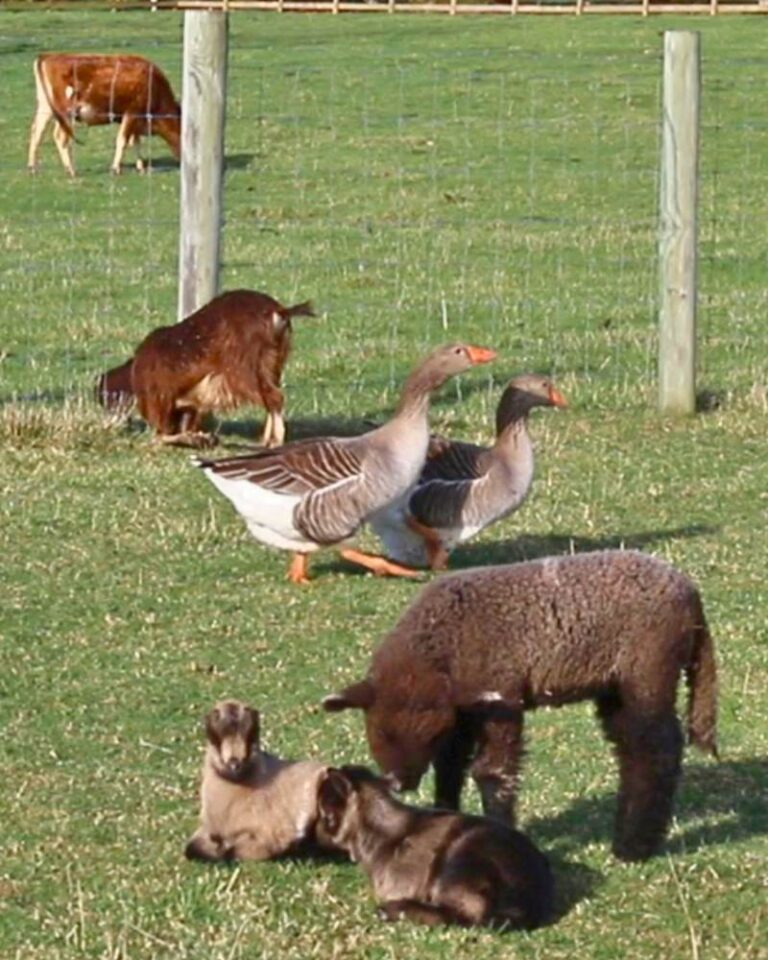
When we first brought goats to our little homestead, we thought we had done our homework.
We had read books.
We had watched videos.
We had talked to other goat owners. (and listened to both their joys and horror stories)
Surely we were prepared.
As it turns out, goats have a wonderful way of teaching you lessons that no book can fully explain. (as most things in life do)
Thankfully, most of our mistakes were simply learning experiences, and our goats were patient teachers. (well, mostly)
If you’re thinking about adding goats to your own homestead, I hope these lessons help make your journey a little smoother.
Mistake #1: Underestimating How Curious Goats Are
Everyone jokes about goats escaping.
I laughed, too.
Then we got goats.
Goats don’t necessarily want to run away—they simply want to investigate everything you hoped they wouldn’t.
A gate left unlatched.
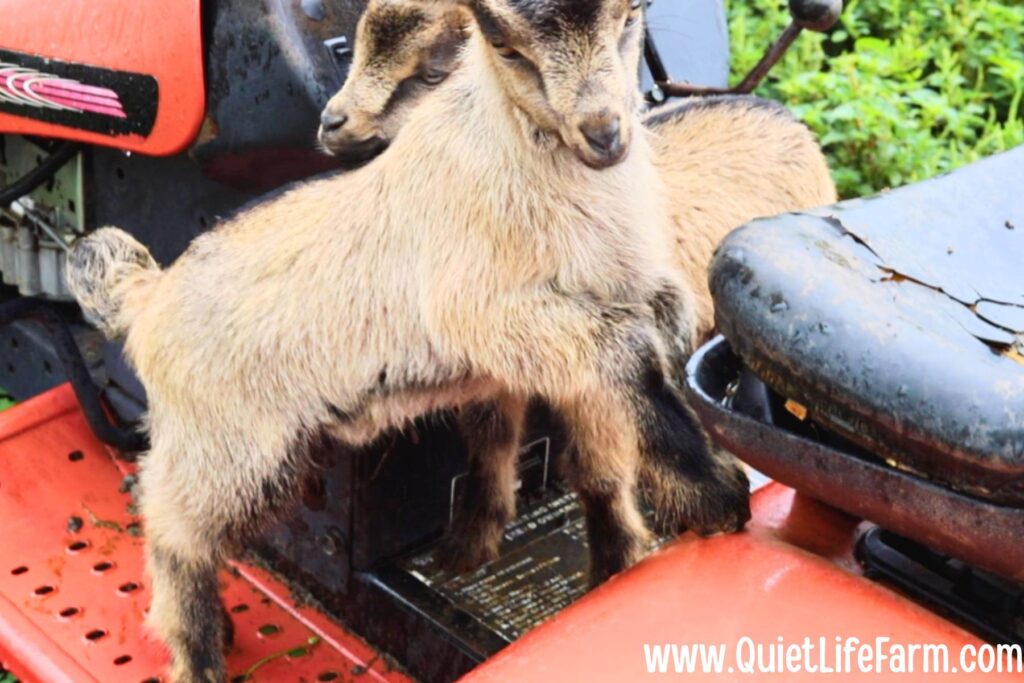
A standard fence in height that is apparently too short for goats.
Trash or something similar that unknowingly blew into your pasture in a recent wind storm.
If there’s something interesting nearby, they’ll probably find it.
Goats keep things interesting, to say the least.
Mistake #2: Thinking Any Fence Would Work
Closely related to the first lesson…
Goats are excellent problem-solvers.
If a fence can be climbed, squeezed under, leaned over, or pushed through, eventually one of your goats will discover how.
Investing in TALL sturdy fencing from the start is one of the best decisions you can make.
It will save both frustration and countless walks across the pasture carrying a grain bucket.
The better your fencing and gates are from the beginning, the fewer surprises you’ll have later.
And years down the road, they’ll still surprise you with a new escape route they’ve discovered.
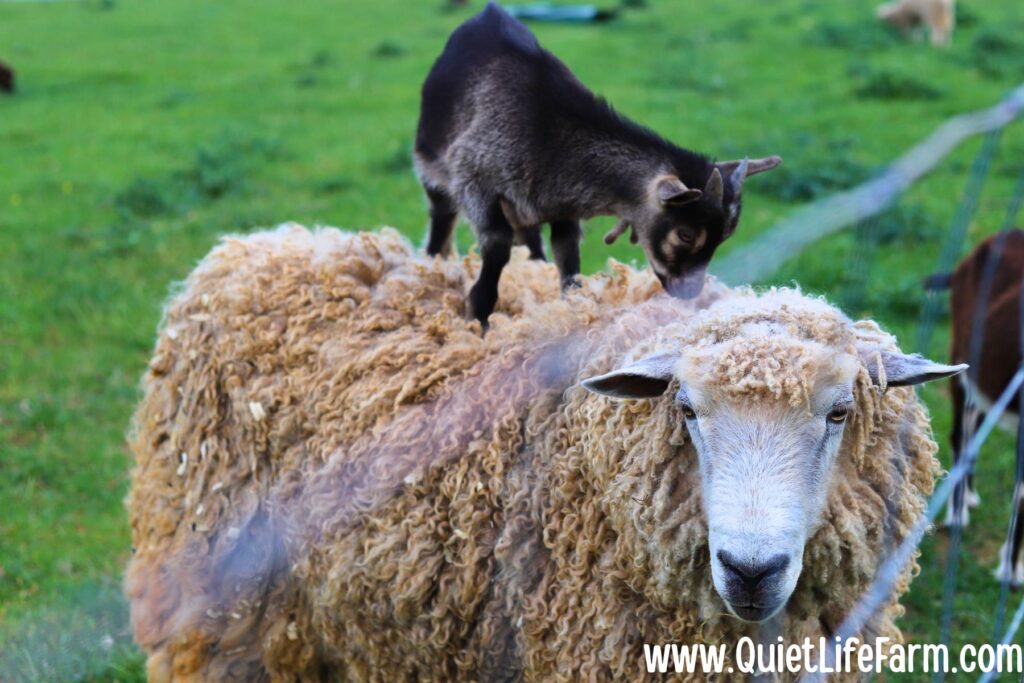
I’ll never forget the full sized goat I brought home to what I thought was finally goat-proofed fencing.
Turns out, it was only good enough fencing for our existing mini goats.
This full sized goat was jumping over the pasture fence into my garden every 30 minutes. She ate so much of my produce. Not a fun day.
Above all else — your fencing needs to be TALL. Taller than your standard fencing.
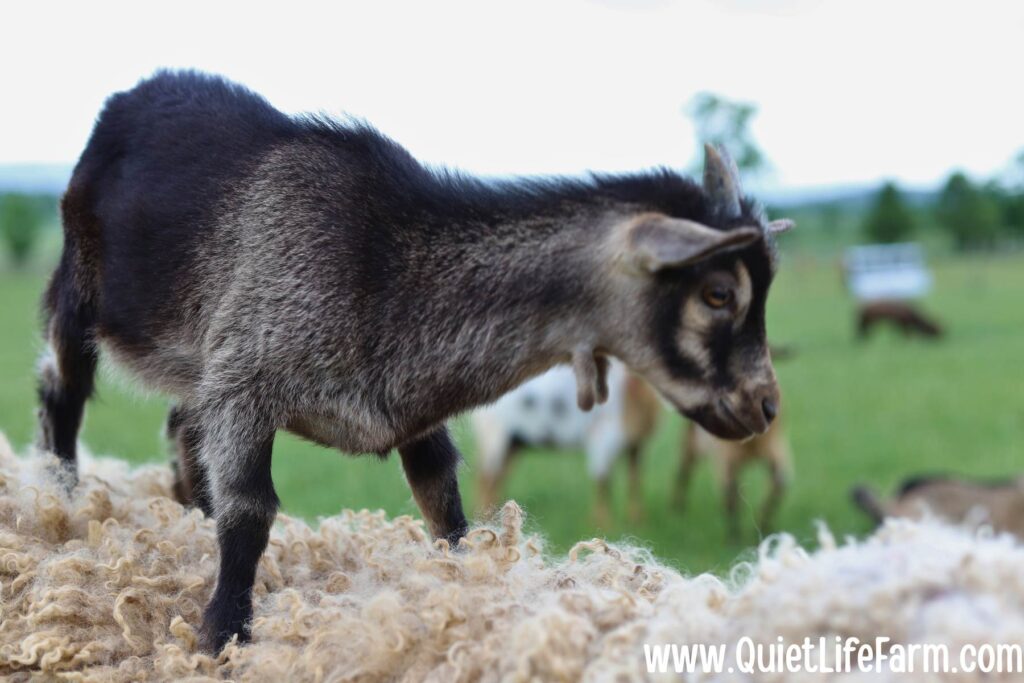
If you don’t have the option for the perfect goat fencing, get mini goats. They respect fencing SO much better than full sized goats do. I’ve found specifically that mini lamancha goats are respectful of fencing. Their personalities are much more gentle/chill. Plus, anything mini is pretty short…which is a good “cheat” to making your fencing taller.
Mistake #3: Thinking They’d Give Us Enough Milk
We got our goats to “test the water” on livestock, but were also hoping for fresh milk.
But in reality, we hardly got any milk from goats.
From what I know now, the families who are getting enough goat milk to actually drink and use are milking multiple goats.
And, they’re milking full size goats (not minis, not Nigerian dwarfs).
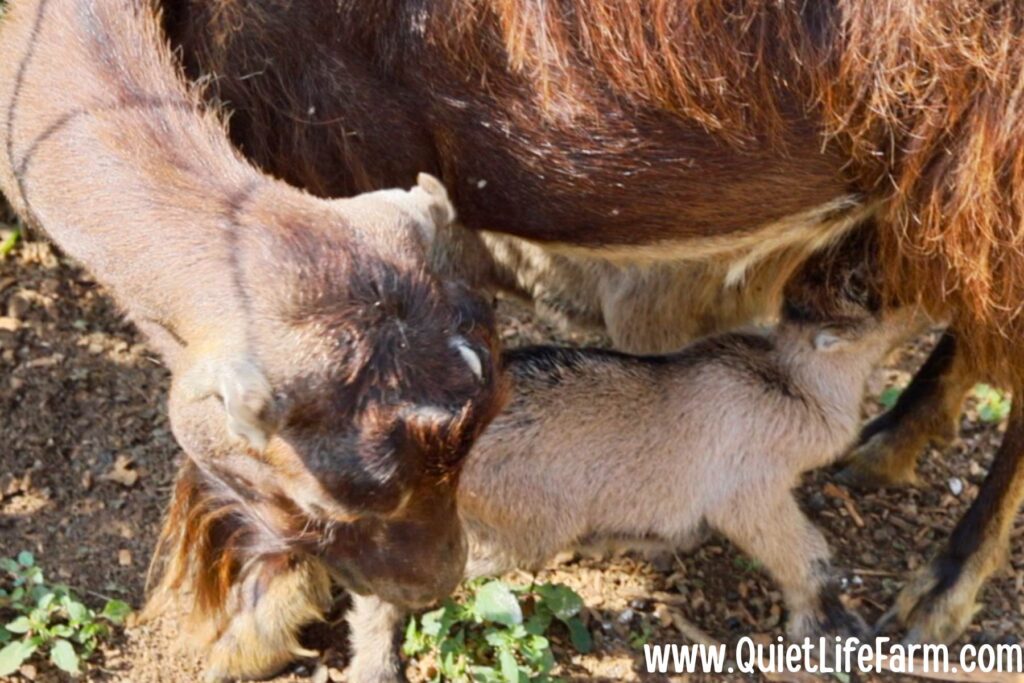
I still can’t comprehend how in the world Nigerian Dwarf creameries are getting enough milk to sell things like cheese.
When we were milking a mini goat, it was like, “Okay, who’s turn is it to drink a tiny glass of milk today?”
You’re not going to get a “cow amount” of milk from a goat.
And if you have a large family like we do and want milk, really just consider the cow.
Mistake #4: Assuming They’ll Eat Anything
Goats have a reputation for eating tin cans.
Thankfully, that’s mostly a myth.
In reality, they’re surprisingly picky.
They browse much more than they graze, preferring leaves, shrubs, vines, and tender branches over a field of grass.
And, thankfully, they’re usually smart enough to know what’s safe for them to eat, and what’s not safe for them to eat. In our experience, our goats just do not touch any plants that could could make them sick or that they do not like.
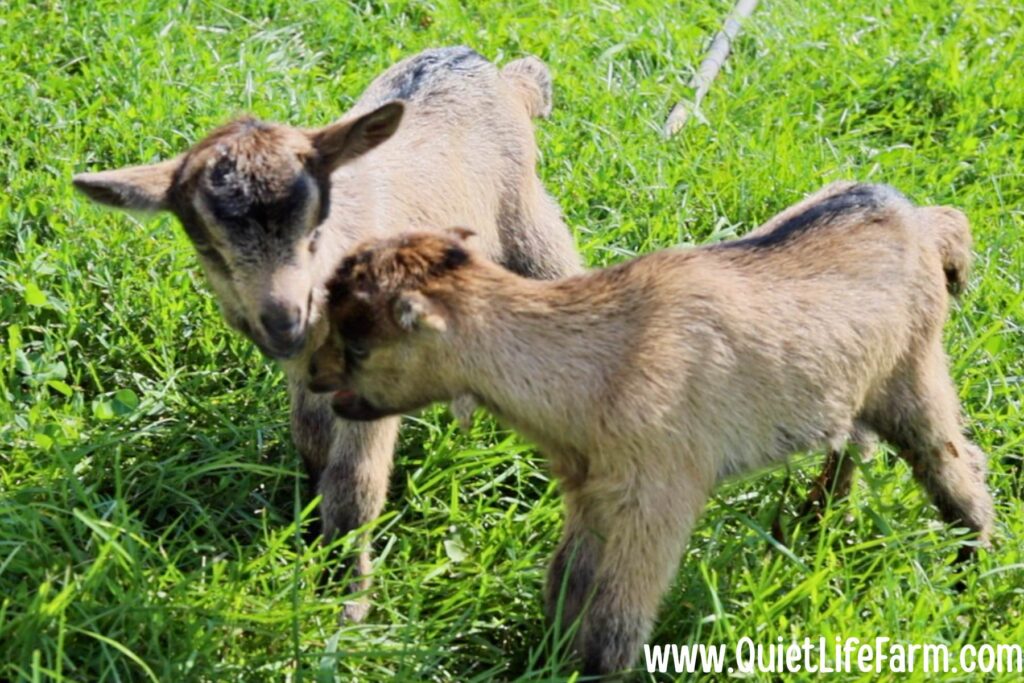
Even if you really, really want them to just get rid of those pesky thistles in your pasture for you.
Understanding the difference helped us plan our pasture much more effectively.
Mistake #5: Assuming They’re The Perfect “Starter” Livestock
Goats were the very first “livestock” we added to our farm.
I thought they’d be the perfect introduction to see if we really “liked” homesteading.
I also wanted to see how our young children would be around livestock.
But looking back, I really would have jumped right to the pigs and cows.
They’re about the same amount of work, but if you are looking for livestock with a larger “purpose” than just being pets, I would have just started out with the more “practical” animals.
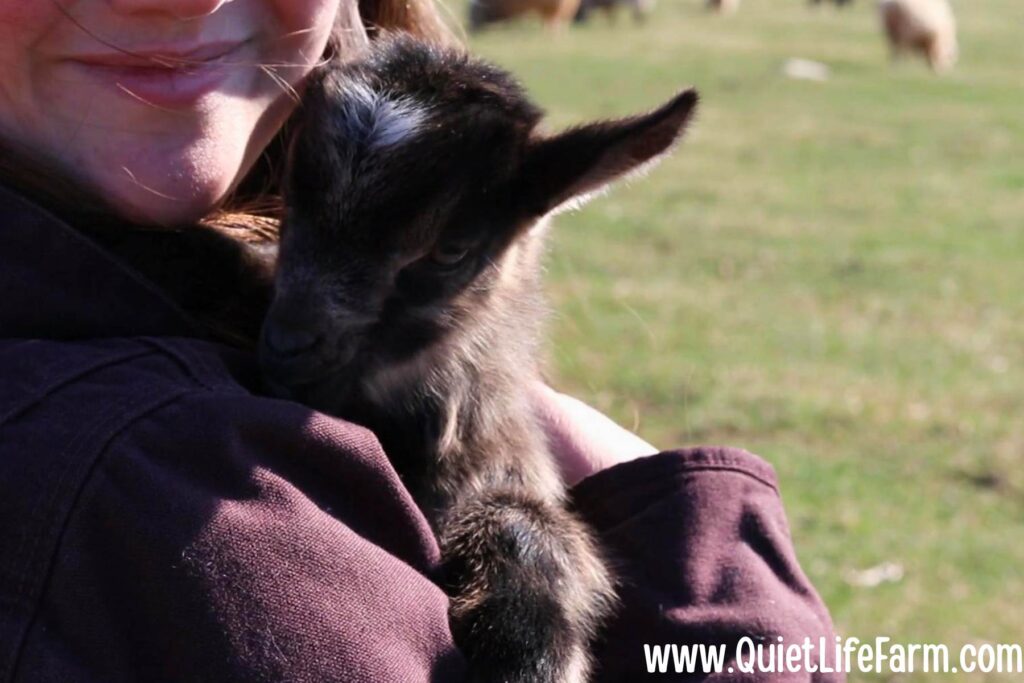
That being said, goats are the friendliest animals on the farm.
They are the BEST pets, and I don’t think I’ll ever not have goats.
They adore our children (and us), and we adore them.
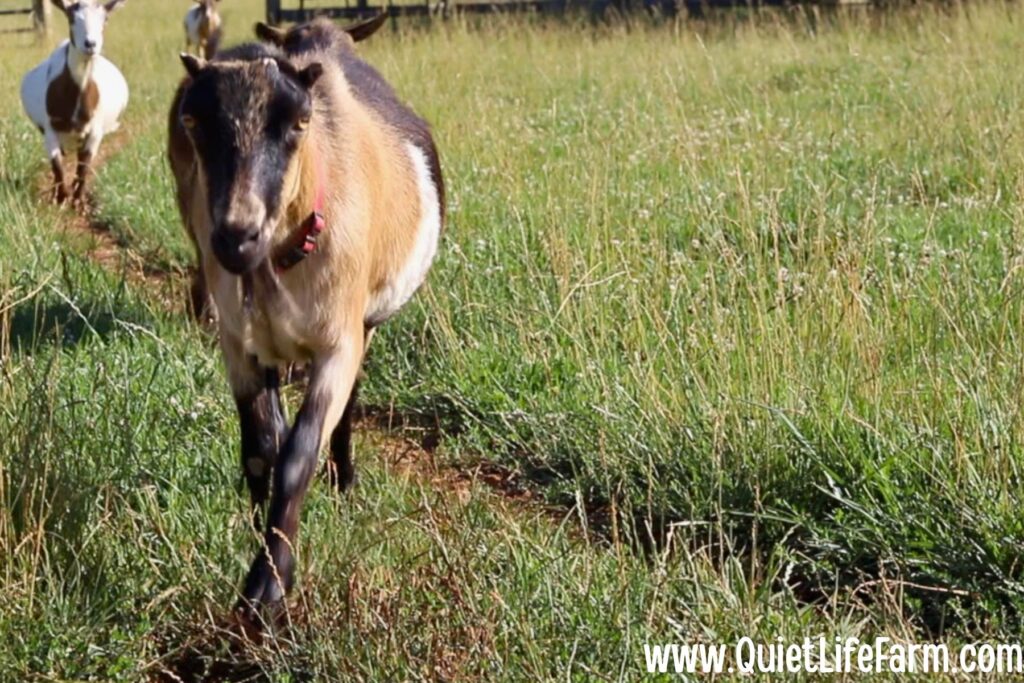
They’re the fastest to run up to us every time they see us outside, and love cuddles.
But on the practical “purposeful” side of things, the amount of care and knowledge you need for a cow vs a goat is about the same.
Livestock as a whole really isn’t that scary to have.
Mistake #6: Thinking They’d Stay Out of the Garden
This one should have been obvious. But because of my own mistakes (see mistake #2), I needed to say it just one more time.
Goats love gardens.
Just not in the way gardeners do.
If your vegetable garden isn’t well protected, your goats may happily “help” themselves to your hard work.
Did I mention tall fencing?
Trust me—it’s much easier to build a sturdy fence before planting than after discovering a goat standing where your tomatoes used to be.
But hey — they’re also FABULOUS for helping you do your end of the year gardening cleanup. They’ll eat most of the remains and help gently till and fertilize your garden patch for next year. Keep a few chickens in your retired garden patch with your goats, and they’ll do the vast majority of your garden cleanup work for you!
Mistake #7: Buying Goats Before Having Everything Ready
It’s exciting to bring home new animals.
Sometimes a little too exciting.
Looking back, I wish we’d had every part of their setup completely finished before they arrived.
For us, the biggest mistake was actually not having ENOUGH goats on our pasture to start.
It was TOO large a space, to the point that the grass grew too tall over their heads.
We had to set up extra fencing to make a smaller spot in the pasture for them and keep the rest mowed until we got more animals.
Having everything ready makes those first few days much less stressful—for both you and your goats.
And sometimes it just takes a while to find that balance for your land. That’s okay. Things are seldom PERFECTLY prepared in advance. Just be ready the best you can be. It’s all a learning experience for each individual family — because only YOU are living on YOUR land.
Mistake #8: Thinking We’d Know Everything Right Away
This may be the biggest lesson of all.
Every animal teaches you something.
Every season brings new experiences.
Every challenge makes you a little more capable.
There are still things we’re learning, and I suspect there always will be.
That’s part of the joy of homesteading.
No amount of books can bring you the same knowledge as hands on experience can.
No amount of YouTube videos can show you what your own individual family will expect on your own individual land.
What Goats Have Taught Us
Despite the occasional escape attempt, the nibbled plants, and the lessons learned through trial and error, I wouldn’t trade our goats for anything.
They’ve taught us patience.
They’ve made us laugh.
They’ve reminded us that animals each have unique personalities, and that learning to care for them well is a skill built one day at a time.
If you’re thinking about getting goats, don’t let these mistakes discourage you.
Every homesteader has stories like these.
The important thing isn’t avoiding every mistake—it’s learning from them and continuing to grow.
Before long, you’ll probably have a few goat stories of your own.
And chances are, you’ll laugh about them too.
I think goats will always have a place on our homestead. I wouldn’t consider them the most “practical” animals, but they’re certainly the most practical for our hearts and for our joy.